
-
Olive Wood Handle Chef Knife with Patterned Steel Blade for Everyday Cooking
Regular price $178.00 USDRegular price -
Santoku and Bunka Blade Blanks Set for Custom Kitchen Knives
Regular price $399.00 USDRegular price -
6-Piece Crimson Handle Japanese Chef Knife Set with Layered Handles
Regular price $269.00 USDRegular price -
Brown Pakkawood Full-Tang Kitchen Knife Set for Everyday Cooking
Regular price $349.00 USDRegular price -
Rosewood Damascus Brisket Chef Knife Set with Layered Blades
Regular price $250.00 USDRegular price -
Burl Wood Damascus Kitchen Utility & Carving Knife with Copper Bolsters
Regular price $190.00 USDRegular price -
Raindrop Damascus Solid Brass Gyuto Chef Knife with Red Handle for Kitchen Prep
Regular price $180.00 USDRegular price -
Olive Wood & Buffalo Horn Damascus Chef Knife with Stacked Handles
Regular price $199.00 USDRegular price -
Raindrop Damascus Full-Tang Gyuto Knife with Dark Handle
Regular price $120.00 USDRegular price -
Buffalo Horn Damascus Butcher Chef Knife Set with Cleaver for Kitchen Work
Regular price $180.00 USDRegular price -
Emberstag Staghorn Damascus Butcher Chef Knife Set for Whole Cut Prep
Regular price $199.00 USDRegular price -
Wingcrest Bone Wing Guard Damascus Santoku Knife Set for Multi Cook Kitchens
Regular price $299.00 USDRegular price -
Rosewood 3-Piece Chef Knife Set for Home Cooks
Regular price $355.00 USDRegular price -
Forged Steel 5-Piece Chef Knife Set with Rosewood Handles
Regular price $344.00 USDRegular price -
Rosewood Brisket Knife Set of 5 with Long Slicer and Forged Kitchen Blades
Regular price $344.00 USDRegular price -
Wa Handle Santoku Knife Set of 4 with Layered Steel Blades and Horn Ferrules
Regular price $322.00 USDRegular price -
Two Tone Wood Chef Knife Set of 5 with Copper Pins and Forged Kitchen Blades
Regular price $334.00 USDRegular price -
Stag Handle Butcher Knife Set of 5 with Rosewood Spacers and Forged Blades
Regular price $455.00 USDRegular price -
Green Handle Cleaver Knife Set of 5 with Forged Blades and Rosewood Bolsters
Regular price $433.00 USDRegular price -
Blue Burl Wood Kitchen Knife Set of 5 with Cleaver, Santoku and Bread Blades
Regular price $355.00 USDRegular price


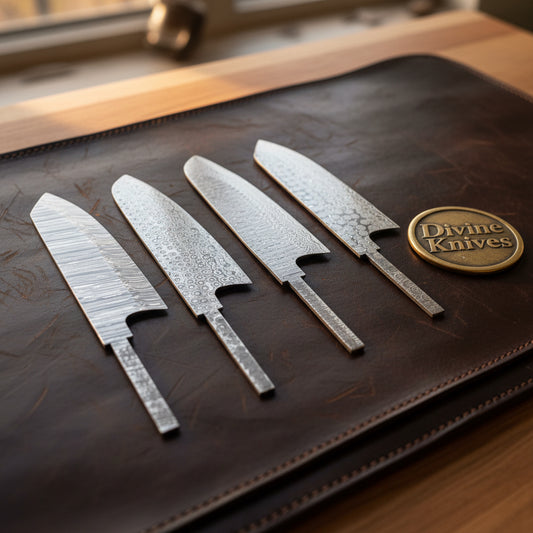


A chef knife is a general-purpose kitchen knife with a broad, tapering blade, usually between 6 and 12 inches long, used to chop, slice, dice, and mince a wide range of ingredients. It is the primary cutting tool in most kitchens because its curved edge supports a rocking motion while its flat heel absorbs downward force. Divine Knives forges chef knives by hand for cooks who depend on a sharp, balanced, and durable blade for daily food preparation.
What Defines a Quality Chef Knife
Three attributes determine how a chef knife performs: blade steel, edge geometry, and balance. High-carbon steel holds a keen edge longer than basic stainless steel and is easier to resharpen, while Damascus steel layers multiple alloys to combine edge retention with a distinct flowing pattern. Edge geometry sets the cutting angle, where a thinner bevel slices cleanly and a wider bevel withstands harder tasks such as cutting through bone. Balance describes the weight distribution between the blade and the handle, and a balanced knife reduces hand fatigue during long preparation sessions. A full-tang construction, in which the steel runs the full length of the handle, adds strength, control, and long-term stability.
Types of Chef Knives in This Collection
Each chef knife is shaped for a specific cutting task, and selecting the right blade depends on the food being prepared.
- Santoku Knife — A Japanese all-purpose knife with a flat edge and shorter blade, ideal for precise slicing, dicing, and mincing.
- Nakiri Knife — A straight-edged vegetable knife that cuts cleanly to the board, suited for chopping greens, roots, and herbs.
- Cleaver Knife — A heavy, rectangular blade built to portion meat, crush garlic, and handle dense produce.
- Butcher Knife — A robust blade designed for breaking down large cuts of meat with controlled, powerful strokes.
- Boning & Fillet Knife — A thin, flexible blade that separates meat from bone and removes skin from fish with accuracy.
- Paring Knife — A small, agile knife for peeling, trimming, and detailed work that a larger blade cannot manage.
- Bread Knife — A serrated blade that saws through crusty loaves and soft interiors without crushing them.
- Damascus Chef Knife — A layered-steel chef knife valued for sharpness, edge retention, and patterned aesthetics.
- Chef Knife Set — A coordinated group of kitchen knives that covers everyday cutting needs in a single purchase.
How to Choose a Chef Knife
Choose a chef knife based on cooking frequency, hand size, and the foods prepared most often. A cook who prepares vegetables daily benefits from a Santoku or Nakiri, while a cook who portions meat regularly is better served by a cleaver or butcher knife. Blade length should match grip comfort, as a longer blade covers more food per stroke and a shorter blade offers tighter control. Handle material affects grip security, and a full-tang handle improves balance and durability. A complete kitchen often combines one versatile chef knife with a paring knife and a bread knife.
Caring for a Chef Knife
Proper maintenance preserves edge sharpness and extends a knife's working life. Hand-wash each blade with mild soap and dry it immediately, because high-carbon steel can stain or corrode when left wet. Store knives in a block, on a magnetic strip, or in a sheath to protect the edge from contact damage. Hone the blade regularly with a steel rod and sharpen it with a whetstone when cutting performance declines. With consistent care, a handmade chef knife remains a reliable kitchen tool for years.
Frequently Asked Questions
What size chef knife is best for home cooking?
An 8-inch chef knife is the most versatile size for home cooks, because it covers most cutting tasks while remaining easy to control. Cooks with larger hands or higher prep volume often prefer a 10-inch blade, while a 6-inch blade suits smaller kitchens and detailed work.
What is the difference between a chef knife and a Santoku knife?
A chef knife has a curved edge built for a rocking cut, while a Santoku has a flatter edge designed for a straight up-and-down chopping motion. The chef knife is more versatile across tasks, and the Santoku gives cleaner control on vegetables and precise slices.
Is high-carbon steel or stainless steel better for a chef knife?
High-carbon steel takes a sharper edge and is easier to resharpen, but it requires drying and occasional oiling to prevent corrosion. Stainless steel resists rust with less maintenance, so the better choice depends on whether you prioritize edge performance or low upkeep.
How often should a chef knife be sharpened?
A chef knife used daily should be honed with a steel rod before most uses and sharpened with a whetstone every few months. The exact interval depends on usage, cutting surface, and steel hardness, so sharpen whenever the blade stops slicing cleanly.
Can a chef knife cut through bone?
A standard chef knife is not designed to cut through bone, as the impact can chip or roll the edge. Use a cleaver or butcher knife for bones and heavy joints, and reserve the chef knife for meat, vegetables, and softer ingredients.
Which chef knife should a beginner buy first?
A beginner should start with a single 8-inch chef knife, since it handles the majority of kitchen tasks on its own. A paring knife and a bread knife can be added later to complete a basic set.
Are Damascus chef knives only for appearance?
Damascus chef knives are functional as well as decorative, because the layered steel can combine a hard, sharp cutting core with a tougher outer body. The flowing pattern is a visible result of the forging process rather than a surface decoration.
How should chef knives be stored?
Store chef knives in a knife block, on a magnetic strip, or in individual sheaths to protect the edge and prevent accidents. Avoid loose storage in a drawer, where blades dull against other utensils and dings damage the cutting edge.
Browse the full Divine Knives chef knife collection to find the blade that matches your cooking style.
