
-
Damascus Stacked Bone Kukri with Layered Curved Blade
Regular price $160.00 USDRegular price

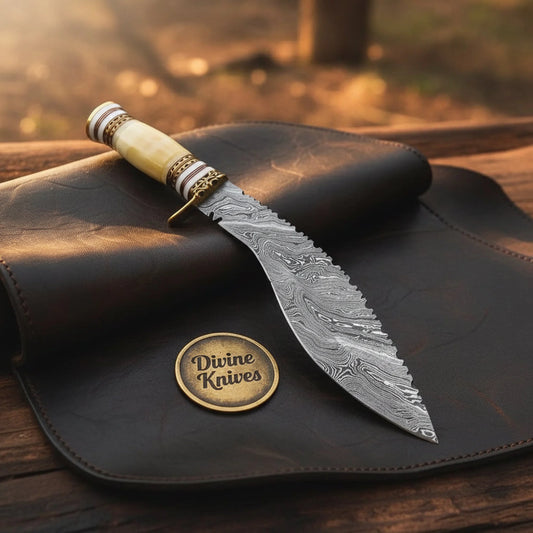
An engraved kukri is a traditional Nepalese kukri knife finished with decorative etching, carving, or filework on its blade, bolster, or handle. The kukri is defined by its forward-curved blade that angles inward, concentrating weight toward the belly to deliver powerful chopping cuts. An engraved kukri keeps this functional shape while adding hand-applied artwork, which turns the knife into a collectible, display, and gift piece. Divine Knives forges engraved kukris by hand for collectors and enthusiasts who want craftsmanship in both the blade and its decoration.
What Defines an Engraved Kukri
A kukri is identified by three features: the inward-curving blade, the wide belly that drives chopping force, and the small notch near the handle called the cho. Engraving is a fourth, decorative layer applied to this established form. The artwork is etched, carved, or filed into the steel and fittings rather than printed, so each pattern is permanent and unique to the piece. Common motifs include traditional Nepalese symbols, geometric borders, floral scrollwork, and personalized initials or dates. The engraving does not change how the blade cuts; it adds visual identity and value to a working tool.
Engraving Styles and Handle Materials
Engraved kukris vary by both the decoration method and the materials used. Acid etching produces fine surface patterns and contrast, hand filework shapes the spine and bolster, and deep carving adds dimension to handles. Handle materials commonly include hardwood, water buffalo horn, bone, and brass fittings, each of which can be carved or inlaid to match the blade's theme. A polished or Damascus blade provides a striking background for engraving, with the layered steel pattern complementing the etched design. The combination of blade finish, fittings, and motif makes each engraved kukri distinct.
How Engraved Kukris Are Used
An engraved kukri serves three main purposes: collection, display, and gifting. Collectors value engraved pieces for their craftsmanship and the cultural history of the kukri, which has been carried by Gurkha soldiers for generations. Display owners mount engraved kukris on stands or wall sheaths to showcase the artwork. As a gift, an engraved kukri marks occasions such as anniversaries, retirements, and ceremonies, especially when personalized. While many engraved kukris remain fully functional for chopping and bushcraft, heavily decorated pieces are usually kept as keepsakes.
How to Choose an Engraved Kukri
Choose an engraved kukri based on its intended role. A piece meant for display or gifting can prioritize intricate engraving, premium handle materials, and a matching sheath. A piece meant for occasional use should keep a full-tang construction and a comfortable, secure grip. Blade length affects both balance and presentation, with longer blades offering more chopping power and more surface for engraving. For a coordinated style, compare the engraved kukri against related models such as the Traditional Kukri, Gurkha Kukri, Damascus Kukri, and Collector Kukri.
Caring for an Engraved Kukri
Proper care protects both the edge and the engraving. Wipe the blade clean after handling and apply a light coat of oil, since high-carbon steel can corrode and rust may settle into etched lines. Avoid abrasive polishes that can wear down fine engraving over time. Store the kukri in its sheath or on a display stand, away from humidity, and keep horn or bone handles out of direct heat to prevent cracking. With consistent care, an engraved kukri retains both its cutting ability and its decorative detail for decades.
Frequently Asked Questions
What is an engraved kukri?
An engraved kukri is a curved Nepalese kukri knife decorated with etching, carving, or filework on the blade, bolster, or handle. The engraving is applied to a fully formed kukri, so the knife keeps its traditional chopping shape while gaining decorative value.
Is an engraved kukri functional or only decorative?
Many engraved kukris are fully functional and can chop, clear, and carve like a standard kukri. Heavily decorated or premium pieces are often kept for display or collection, but the engraving itself does not reduce cutting performance.
What is the notch on a kukri blade for?
The notch near the handle is called the cho, a traditional feature of authentic kukris. It carries cultural and symbolic meaning and also helps stop liquids from running onto the handle during use.
What materials are used for engraved kukri handles?
Engraved kukri handles are commonly made from hardwood, water buffalo horn, bone, or fitted with brass. These materials can be carved or inlaid to match the engraving on the blade.
Are engraved kukris good gifts?
Engraved kukris are popular gifts because the decoration can be personalized with names, dates, or symbols. They suit occasions such as anniversaries, retirements, and ceremonial presentations.
How do I care for an engraved kukri?
Clean and lightly oil the blade after handling to prevent rust from settling into the etched lines, and avoid abrasive polishes that can wear the engraving. Store the kukri in its sheath or on a stand, away from humidity and direct heat.
What steel are kukris made from?
Kukris are traditionally made from high-carbon steel for strength and edge retention, and some are forged from Damascus steel. High-carbon steel holds a keen edge but needs oiling to resist corrosion.
Can the engraving wear off over time?
Hand-etched and carved engraving is permanent under normal handling and display, but harsh abrasives and heavy daily use can gradually soften fine detail. Gentle cleaning and proper storage keep the design crisp for years.
Browse the full Divine Knives engraved kukri collection to find a piece that fits your style.
