
-
Purple Resin Bull Cutter Knife Set for Ranch Work and Collecting
Regular price $189.00 USDRegular price -
5-Piece Hammered Black Knife Set with Wood Handles and Leather Roll Case
Regular price $199.00 USDRegular price -
5-Piece Teal Resin Handle Chef Knife Set with Hammered Blade Finish for Everyday Cooking
Regular price $325.00 USDRegular price -
6-Piece Crimson Handle Japanese Chef Knife Set with Layered Handles
Regular price $269.00 USDRegular price -
Brown Pakkawood Full-Tang Kitchen Knife Set for Everyday Cooking
Regular price $349.00 USDRegular price -
Buffalo Horn Damascus Butcher Chef Knife Set with Cleaver for Kitchen Work
Regular price $180.00 USDRegular price -
Emberstag Staghorn Damascus Butcher Chef Knife Set for Whole Cut Prep
Regular price $199.00 USDRegular price -
Walnut Handle Meat Cleaver with Leather Sheath
Regular price $255.00 USDRegular price -
Two Tone Wood Chef Knife Set of 5 with Copper Pins and Forged Kitchen Blades
Regular price $334.00 USDRegular price -
Stag Handle Butcher Knife Set of 5 with Rosewood Spacers and Forged Blades
Regular price $455.00 USDRegular price -
Green Handle Cleaver Knife Set of 5 with Forged Blades and Rosewood Bolsters
Regular price $433.00 USDRegular price -
Blue Burl Wood Kitchen Knife Set of 5 with Cleaver, Santoku and Bread Blades
Regular price $355.00 USDRegular price -
Rosewood Handle Chef Knife Set of 4 with Hand Forged Patterned Steel Blades
Regular price $433.00 USDRegular price -
Anvilgrey Serbian Chef Knife Set with Six Forged-Finish Blades
Regular price $299.00 USDRegular price -
Tracker Cleaver Knife with Sawback Spine, Squared Tip Blade and Contoured Horn Handle
Regular price $178.00 USDRegular price -
Viking Vegvisir Cleaver with Wood Handle and Cord Wrap
Regular price $170.00 USDRegular price -
Damascus Scourge Gurkha Kukri with Curved Blade and Dark Contoured Handle
Regular price $160.00 USDRegular price -
Prismwood Rainbow Pakkawood Damascus Chef Knife Set
Regular price $200.00 USDRegular price -
Octagonal Wood Handle Chef Knife Set with Layered Steel Blades and Steel Ferrules
Regular price $399.00 USDRegular price -
Rosewood Handle Meat Cleaver Knife with Raindrop Pattern Blade and Tooled Leather Sheath
Regular price $255.00 USDRegular price


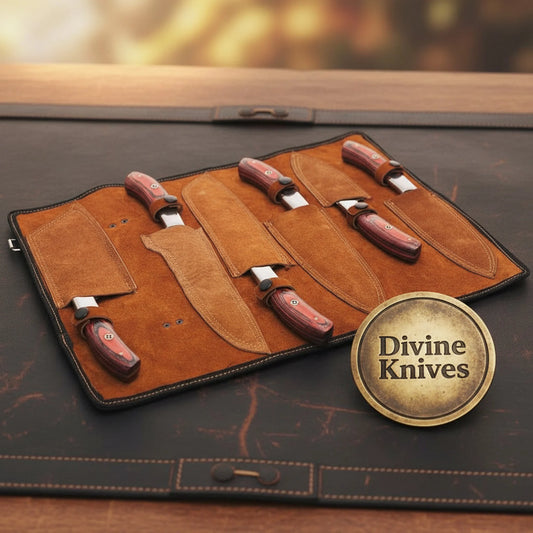


Handmade Cleaver Knife – Damascus Meat & Vegetable Cleavers
A cleaver is the workhorse of any serious kitchen. Whether you're breaking down poultry, portioning ribs, or rapidly slicing a mountain of vegetables, the right cleaver makes heavy prep feel effortless. This collection brings together hand-forged Damascus and high-carbon cleavers built for both Western butchery and Chinese-style food prep.
Meat Cleaver or Vegetable Cleaver — What's the Difference?
Not all cleavers do the same job. A heavy Western meat cleaver has a thick spine and weighted blade for chopping through cartilage and small bones, while a lighter Chinese (caidao) vegetable cleaver uses a thinner, taller blade for slicing, mincing, and scooping. This collection includes both styles so you can match the tool to the task.
What Can You Do With a Cleaver?
- • Chopping through poultry joints, ribs, and small bones
- • Portioning large cuts of meat quickly and cleanly
- • Slicing and mincing vegetables in high volume
- • Crushing garlic or ginger with the flat of the blade
- • Scooping chopped ingredients straight from board to pan
Why Our Hand-Forged Cleavers Stand Out
- Hand-forged Damascus and high-carbon steel for serious chopping power and edge retention
- Full-tang blades with a forward-weighted balance that does the work for you
- Comfortable, secure hardwood and resin handles, triple-riveted for a lifetime of use
- Thick, robust spine on meat models; thinner profile on vegetable models
- Each blade hand-finished and razor-sharpened, ready to use out of the box
Frequently Asked Questions
Q: Can a cleaver cut through bone?
Our heavier meat cleavers are built to chop through poultry joints and small bones with ease. For larger bones, use controlled strikes and let the blade's weight do the work rather than forcing it.
Q: What's the difference between a cleaver and a butcher knife?
A cleaver has a tall, rectangular blade made for chopping and portioning, while a butcher (cimeter) knife has a long, curved blade designed for trimming and slicing larger cuts. Many kitchens keep both.
Q: How do I care for a Damascus cleaver?
Hand-wash, dry immediately, and apply a light coat of food-safe oil before storage. Avoiding soaking or leaving it wet protects both the edge and the Damascus pattern.
