
-
Crocodile Dundee Bowie Knife Set with Brass Guards and Stacked Handles
Regular price $299.00 USDRegular price -
Damascus Stacked Bone Kukri with Layered Curved Blade
Regular price $160.00 USDRegular price -
Buffalo Horn Skinner Knife with Upswept Forged Blade and Polished Steel Bolsters
Regular price $155.00 USDRegular price -
Stag Horn Trailing Point Bowie with Deep Curved Forged Blade and Leather Sheath
Regular price $199.00 USDRegular price -
Colored Resin Handle Bowie Knife with Hand Forged Clip Point Blade and Belt Sheath
Regular price $188.00 USDRegular price -
Bird and Trout Knife with Stag Handle – Handcrafted Caping Knife with Crossdraw Sheath
Regular price $219.00 USDRegular price


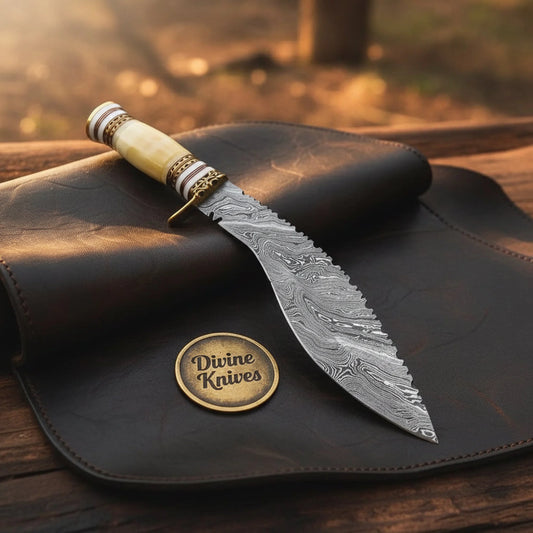

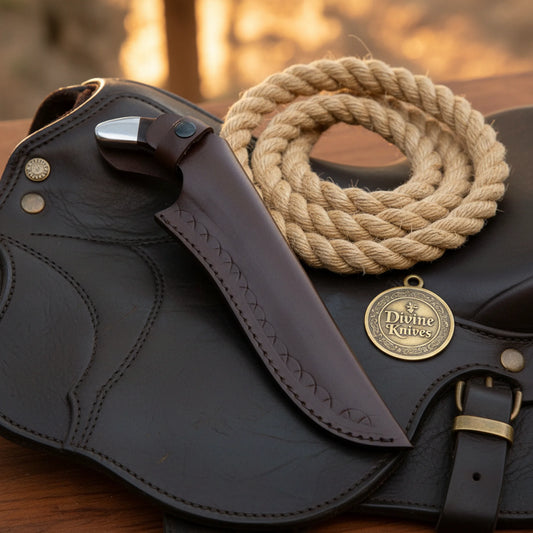


A Damascus kukri is a traditional Nepalese kukri knife forged from Damascus steel, a material made by folding and forge-welding multiple layers of steel into a single blade. The kukri is defined by its forward-curved blade that angles inward, placing weight toward the belly for powerful chopping cuts. Damascus construction adds a flowing, layered pattern to that proven shape while combining hardness for edge retention with toughness for impact resistance. Divine Knives forges Damascus kukris by hand for collectors and outdoor users who want a knife that performs and displays equally well.
What Defines a Damascus Kukri
A kukri is identified by three features: the inward-curving blade, the wide belly that drives chopping force, and the small notch near the handle called the cho. Damascus steel is the defining material rather than a surface treatment. The pattern is created by repeatedly layering and folding steels of different carbon and alloy content, then etching the finished blade to reveal the contrast between layers. This process can produce a blade with a hard cutting core and a more flexible body, which suits the heavy chopping motion a kukri is built for. Each Damascus kukri carries a unique pattern, since no two billets fold identically.
Steel, Patterns, and Handle Materials
Damascus kukris vary by pattern style and handle material. Common patterns include ladder, twist, and raindrop, each formed by manipulating the steel layers before grinding. The visible pattern is functional in origin, marking the boundaries between the welded layers rather than being printed on. Handle materials commonly include hardwood, water buffalo horn, bone, and brass fittings, chosen for grip and durability under repeated impact. A full-tang construction, where the steel runs the length of the handle, adds the strength a chopping blade requires. The pairing of pattern, fittings, and balance gives each Damascus kukri its character.
How Damascus Kukris Are Used
A Damascus kukri serves both practical and collectible roles. Outdoors, the heavy forward belly makes it effective for clearing brush, splitting kindling, and general camp and bushcraft tasks. As a collectible, the layered steel pattern and cultural history of the kukri make it a valued display and gift piece. The kukri has been carried by Gurkha soldiers for generations, which adds heritage value to a well-made example. Many owners use a Damascus kukri in the field while reserving higher-end pieces for display, depending on the finish and fittings.
How to Choose a Damascus Kukri
Choose a Damascus kukri based on its intended use. A working knife should prioritize full-tang construction, a secure handle, and a sturdy sheath, while a display or gift piece can emphasize pattern detail and premium materials. Blade length affects both chopping power and balance, with longer blades delivering more force and shorter blades offering control. To compare styles, view related models such as the Traditional Kukri, Gurkha Kukri, Bushcraft Kukri, Collector Kukri, and Engraved Kukri.
Caring for a Damascus Kukri
Damascus steel needs regular care to protect both the edge and the pattern. Wipe the blade clean and apply a light coat of oil after each use, since the high-carbon layers can rust and corrosion dulls the pattern contrast. Avoid harsh abrasives that can flatten the etched surface, and dry the blade fully before storage. Keep the kukri in its sheath or on a display stand, away from humidity, and protect horn or bone handles from direct heat to prevent cracking. With consistent care, a Damascus kukri keeps both its cutting performance and its patterned finish for decades.
Frequently Asked Questions
What is a Damascus kukri?
A Damascus kukri is a curved Nepalese kukri knife forged from layered Damascus steel. It combines the kukri's traditional chopping shape with a patterned blade made by folding and forge-welding multiple steel layers.
Is Damascus steel better for a kukri?
Damascus steel can offer a strong balance of edge retention and toughness, which suits the heavy chopping a kukri performs. It also produces a distinctive pattern, though performance depends on the specific steels and the heat treatment used.
What is the notch on a kukri blade for?
The notch near the handle is called the cho, a traditional feature of authentic kukris. It carries cultural and symbolic meaning and helps keep liquids from running onto the handle during use.
Is the Damascus pattern printed or real?
On a genuine Damascus kukri the pattern is structural, formed by the boundaries between forge-welded steel layers and revealed through acid etching. It is not a printed or stamped surface decoration.
Can a Damascus kukri be used outdoors?
Yes, a full-tang Damascus kukri is well suited to clearing brush, splitting kindling, and camp tasks. Premium or heavily finished pieces are often kept for display instead of hard field use.
What handle materials are used on Damascus kukris?
Damascus kukri handles are commonly made from hardwood, water buffalo horn, or bone, often with brass fittings. These materials are chosen for grip and durability under repeated impact.
How do I care for a Damascus kukri?
Wipe the blade clean and apply a light coat of oil after use to prevent rust, and avoid abrasive polishes that dull the pattern. Store the kukri dry in its sheath or on a stand, away from humidity and direct heat.
Are Damascus kukris good for collecting or gifting?
Damascus kukris are popular for collection and gifting because each blade carries a unique pattern and the kukri has strong cultural heritage. A quality piece works well for display, milestones, and ceremonial presentation.
Browse the full Divine Knives Damascus kukri collection to find a blade that fits your needs.
