
-
Musso Bowie Knife with Inlaid Brass Spine Strip and Buffalo Horn Grip
Regular price $190.00 USDRegular price -
Crocodile Dundee Bowie Knife Set with Brass Guards and Stacked Handles
Regular price $299.00 USDRegular price -
Stacked Leather Handle Bowie Knife with Wide Fuller Blade and Brass S Guard
Regular price $244.00 USDRegular price -
Stag Handle Bowie Knife with Fullered Mirror Blade and Brass Guard
Regular price $211.00 USDRegular price -
Fullered Clip Point Bowie Knife with Pakkawood Handle and Leather Belt Sheath
Regular price $266.00 USDRegular price -
Tealspine Pakkawood Handle Sawback Survival Bowie with Drilled Steel Pommel
Regular price $150.00 USDRegular price -
Multi-Color Stacked Clip Point Bowie with Bright Layered Handle
Regular price $170.00 USDRegular price -
Cordbind Cord-Wrapped Fullered Clip Point Bowie with Ground Fuller
Regular price $200.00 USDRegular price -
Rosewood Handle Fullered Alamo Bowie with Red Spacers
Regular price $150.00 USDRegular price -
Stacked Leather Handle Dundee Bowie with Brass Fittings and Classic Form
Regular price $170.00 USDRegular price -
Wooden Classic Clip Point Bowie with Dark Wood Handle and Simple Guard
Regular price $160.00 USDRegular price -
Rosewood Knuckle Bowie Knife with Integrated Guard and Sawback Spine
Regular price $180.00 USDRegular price -
Damascus Scourge Gurkha Kukri with Curved Blade and Dark Contoured Handle
Regular price $160.00 USDRegular price -
Dundee Bowie Knife Duo with Brass Fittings and Stacked Handles
Regular price $299.00 USDRegular price -
Trailhide Damascus Antler Frontier Bowie with Full Antler Handle
Regular price $160.00 USDRegular price -
Crown Stag Antler Bowie Knife with Large Mirror Clip Point Blade and Leather Sheath
Regular price $244.00 USDRegular price -
Stag Antler Cowboy Bowie Knife with Brass Guard and Tooled Leather Belt Sheath
Regular price $211.00 USDRegular price -
Brass Bolster Carving Chef Knife with Rosewood Handle and Layered Steel Blade
Regular price $211.00 USDRegular price -
Walnut Handle Clip Point Bowie Knife with Fullered Layered Blade and Tooled Leather Sheath
Regular price $222.00 USDRegular price -
Duohilt Sub-Hilt Bowie Knife Duo with Sawback Damascus Blades
Regular price $199.00 USDRegular price


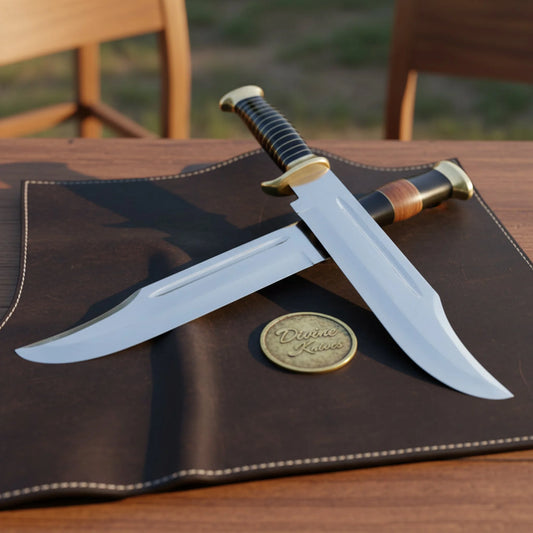


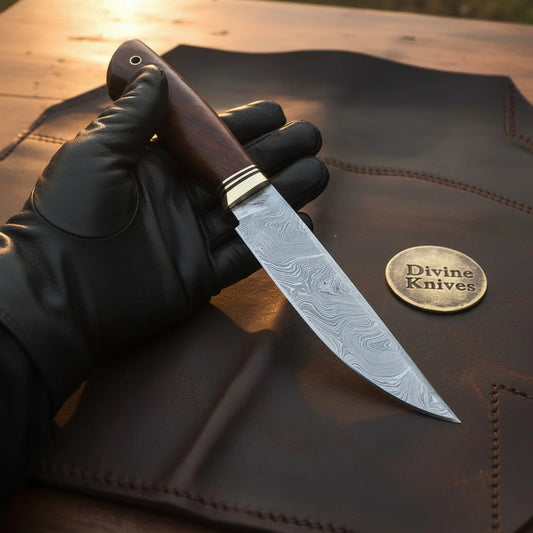

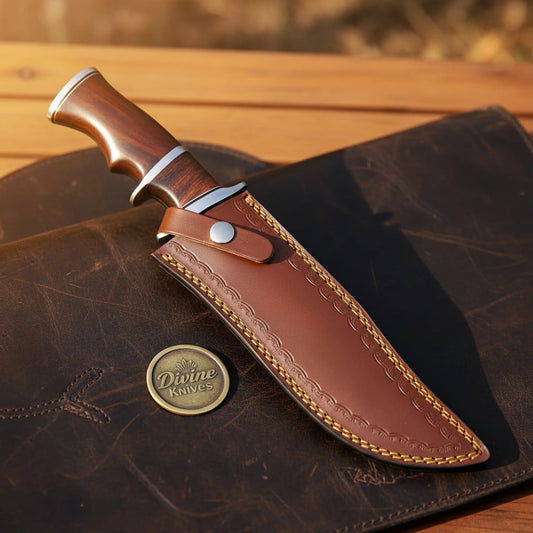

Bowie Knives: The Original American Fixed Blade
A Bowie knife is a large fixed-blade knife defined by a long clip-point blade, a crossguard, and a full handle built for a secure grip. It takes its name from James Bowie, the frontiersman whose reputation after the 1827 Sandbar Fight and death at the Alamo in 1836 turned the pattern into an American legend. From the start it was a dual-purpose tool: a capable fighter and an everyday frontier knife for hunting, skinning, chopping, and camp work. That combination of size, reach, and strength is what still sets a Bowie apart from smaller utility knives.
This collection brings together 30 handcrafted Bowie knives, from classic clip-point patterns to survival and Persian-style designs, with blades suited to hunting, bushcraft, collecting, and display. Each style below links to its own focused collection so you can compare by blade shape, handle, and purpose.
Types of Bowie Knives in This Collection
Bowie knives are grouped by blade profile, build, and finish. Knowing what each variation does best is the quickest way to choose the right blade.
- Classic Bowie Knife — the traditional pattern with a long clip-point blade, false edge, and crossguard. The benchmark every other Bowie is measured against.
- Frontier Bowie Knife — a rugged, period-styled Bowie built for hard outdoor use, echoing the working knives of the early American West.
- Clip Point Bowie — the signature Bowie profile, with the spine "clipped" near the tip for a fine, controllable point that pierces and skins with precision.
- Drop Point Bowie — a stronger, lower tip and a broad belly that make it a steady choice for skinning and general field work.
- Trailing Point Bowie — an upswept blade with a long cutting edge, ideal for slicing and skinning tasks that benefit from extra belly.
- Stag Handle Bowie — finished with natural stag antler for a traditional look, warm grip, and one-of-a-kind character on every knife.
- Survival Bowie Knife — a heavy-duty, full-tang build made for batoning, chopping, and demanding bushcraft in the field.
- Camp Bowie Knife — sized and weighted for camp chores, from splitting kindling to food prep on the trail.
- Persian Style Bowie — a recurved, upswept blade with exotic styling that blends collector appeal with real cutting performance.
- Engraved Bowie Knife — decorative blades and bolsters with hand-detailed engraving, made for display, gifts, and collections.
Blade Steel, Blade Shape, and Handle Materials
A Bowie knife's performance comes down to three attributes: how it is forged, how the point is ground, and what fills the hand.
Blade steel. High-carbon steel takes a keen edge and resharpens easily, which is why it remains the standard for hard-use Bowies; it needs light oiling to resist rust. Damascus steel adds a layered, patterned finish prized by collectors while keeping the same high-carbon edge-holding.
Blade shape. A clip point gives the classic fine, piercing tip. A drop point trades a little reach for a stronger tip and bigger belly. A trailing point maximizes the cutting edge for slicing, and a recurved Persian profile adds aggressive curvature for draw cuts.
Handle materials. Stag and antler, bone, hardwoods, micarta, and copper or brass bolsters each balance grip, durability, and looks. Full-tang construction, where the steel runs the length of the handle, gives a Bowie the strength to take chopping and prying loads.
How to Choose a Bowie Knife
Match the blade to the job. For hunting and skinning, a clip point, drop point, or trailing point gives the right tip and belly for the task. For bushcraft and hard outdoor use, a full-tang survival or camp Bowie handles chopping and batoning. For display, gifting, or collecting, a stag handle, engraved, or Persian-style Bowie delivers standout character. For all-around frontier heritage, start with the classic Bowie.
Carrying and Caring for a Bowie Knife
A Bowie is a fixed blade and rides in a belt or cross-draw sheath; check local laws on blade length and carry before daily use. To keep a high-carbon Bowie performing for decades, wipe the blade dry after use, apply a thin coat of mineral or food-safe oil to prevent rust, and maintain the edge with a whetstone rather than a powered grinder, which can overheat and soften the steel. Stored dry and lightly oiled, a well-made Bowie outlasts its owner.
Frequently Asked Questions
What is a Bowie knife?
A Bowie knife is a large fixed-blade knife with a long clip-point blade and a crossguard, named after frontiersman James Bowie. It works as both a fighting knife and a general-purpose tool for hunting, skinning, chopping, and camp use.
What makes a knife a true Bowie?
The defining features are a sizeable fixed blade, a clip point with a false or sharpened edge near the tip, a crossguard between blade and handle, and a full handle built for control during heavy cutting.
What is a Bowie knife used for?
Bowie knives handle hunting and skinning, bushcraft and batoning, camp chores, food prep, and outdoor utility work. Larger survival and camp models also excel at chopping.
What is the difference between a clip point and a drop point Bowie?
A clip point has a thinner, finer tip for piercing and detail work, while a drop point has a lower, stronger tip and a wider belly that favors skinning and controlled cuts.
What steel is best for a Bowie knife?
High-carbon steel is the traditional choice for its sharp edge and easy field resharpening. Damascus steel offers the same high-carbon performance with a distinctive layered pattern favored by collectors.
How do I keep a Bowie knife from rusting?
Wipe the blade dry after each use, apply a thin coat of mineral or food-safe oil, and store it in a dry place. High-carbon steel rusts if left wet, but regular oiling prevents it.
