Divine Knives
Rosewood Handle Fullered Alamo Bowie with Red Spacers
Rosewood Handle Fullered Alamo Bowie with Red Spacers
Couldn't load pickup availability
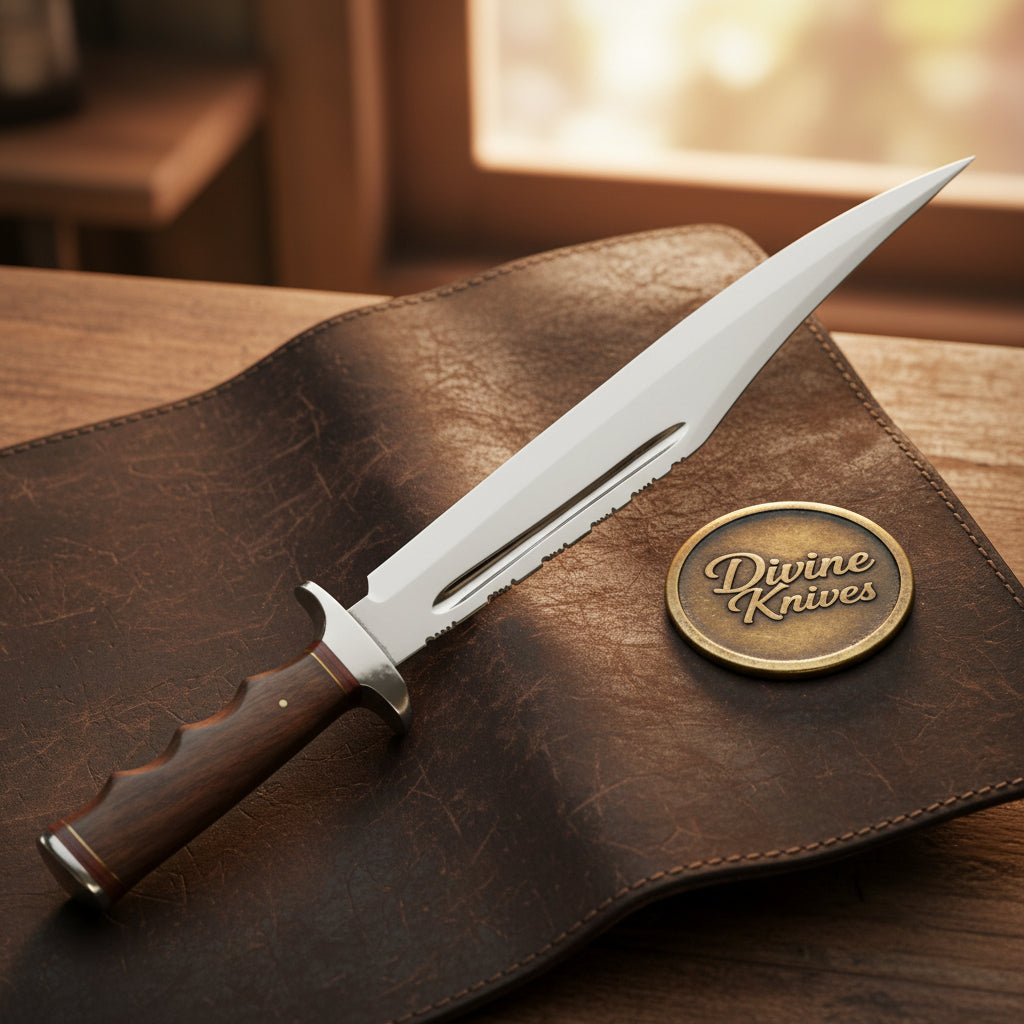
The Rosewood Handle Fullered Alamo Bowie hides its best detail at the seams. Thin red spacers sit between the wood and the steel. One at the guard, one at the butt cap. They are two millimeters of color on a 17-inch knife. Period American cutlers used exactly that trick.
The blade runs 12 inches to a long clip point. A fuller cuts a groove down the upper flat. Fine serrations run along the top of the clip. Mirror polish carries across the whole face.
This fullered Alamo Bowie for sale runs 17 inches overall. Rosewood fills the hand in deep burgundy grain.
Alamo Bowie at Divine Knives with red spacers at both ends, a ground fuller, serrations along the clip, and a mirror-polished 12-inch blade.
The History Behind This Rosewood Handle Alamo Bowie
The Alamo pattern name points to Texas in the 1830s. Large Bowie knives of that decade shared a long clip and a heavy blade. Rosewood was a premium handle stock in American and English cutlery. Thin colored spacers separated wood from metal on better grades. Divine Knives keeps both details on a modern build.
Rosewood Handle Fullered Alamo Bowie Performance
The serrations on the clip give you a rasping edge. Scrape bark or notch a stake without touching the main edge. That top section handles work a keen bevel would dull. Most Bowies leave the clip smooth and waste it.
At 12 inches, you commit to every cut. The blade carries itself down once it starts moving. A mirror face records every touch you leave on it. Handle it dry and wipe the flats after each session. Rosewood needs a light oil once or twice a year.
Specifications
- Product Type: Single large fixed blade Bowie, Alamo pattern
- Blade Material: Carbon steel
- Blade Finish: Mirror polish
- Blade Shape: Long angled clip point with a shallow belly
- Clip Detail: Fine serrations along the top of the clip
- Fuller: One ground fuller, approximately 7 inches
- Overall Length: 17 inches
- Blade Length: 12 inches
- Handle Length: 5 inches
- Blade Width at Widest Point: 2 inches
- Handle Material: Rosewood, deep burgundy with darker grain
- Handle Profile: Solid block, slight taper toward the butt
- Guard: Polished steel with an upswept hooked quillon
- Spacers: Two thin red, one at the guard and one at the butt cap
- Butt Fitting: Polished steel cap
- Edge: Hand-sharpened
Alamo Pattern Bowie Blade Construction
Rosewood takes the grip in one solid block. Deep burgundy runs through with darker grain streaks. The profile tapers slightly from guard to butt. Nothing is carved or contoured into the surface.
A red spacer sits at each end of the wood. Steel closes both ends, guard at the front and cap at the butt. The guard sweeps upward into a hooked quillon on the spine side. The rosewood carries no pins through it. Keep the wood out of direct heat and long sun.
Best Uses for the Lone Star Bowie
Seventeen inches sits at the edge of practical carry. A stand or a wall mount suits it better than a belt. Collectors buy rosewood Alamo Bowie patterns for the period outline. Texas and frontier history collections are the natural market. The red spacers reward a close look in good light.
Order the Lone Star Bowie today. A fuller, clip serrations, and red spacers rarely arrive together.
FAQ’s
What are the serrations on the clip for?
They scrape and rasp without touching the main edge. Bark stripping and notching move to that section.
What are the thin red lines at the ends of the handle?
Those are spacers separating the rosewood from the steel fittings. Nineteenth-century cutlers used them on better grades.
How is this different from the Cordbind fullered Bowie?
The Cordbind runs 10 inches with a cord grip and satin finish. This runs 12 inches with rosewood and a mirror polish.
Does the fuller weaken the blade?
No. Steel is removed from the center, the least useful part. The spine and edge keep their full thickness.
Why is the guard hooked upward?
The upswept quillon catches the spine side of your grip. It stops the hand rolling over the top.