
-
Copper Mai Damascus Skinner with Genuine Copper-Toned Layers
Regular price $219.00 USDRegular price -
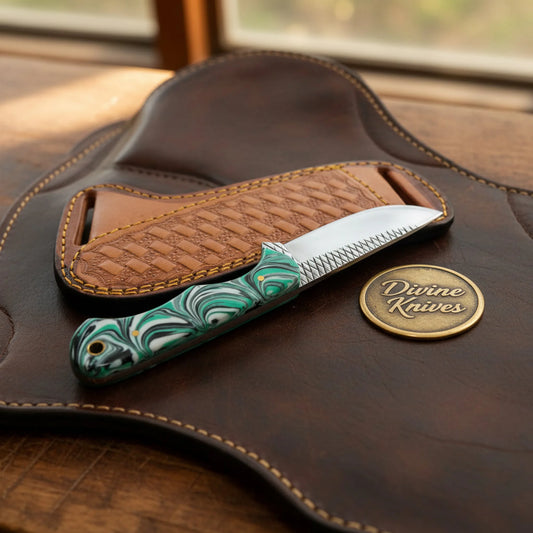
Green Swirl Resin Rasp Cowboy Knife with Clip Point Blade
Regular price $139.00 USDRegular price -
Purple Resin Bull Cutter Knife Set for Ranch Work and Collecting
Regular price $189.00 USDRegular price -
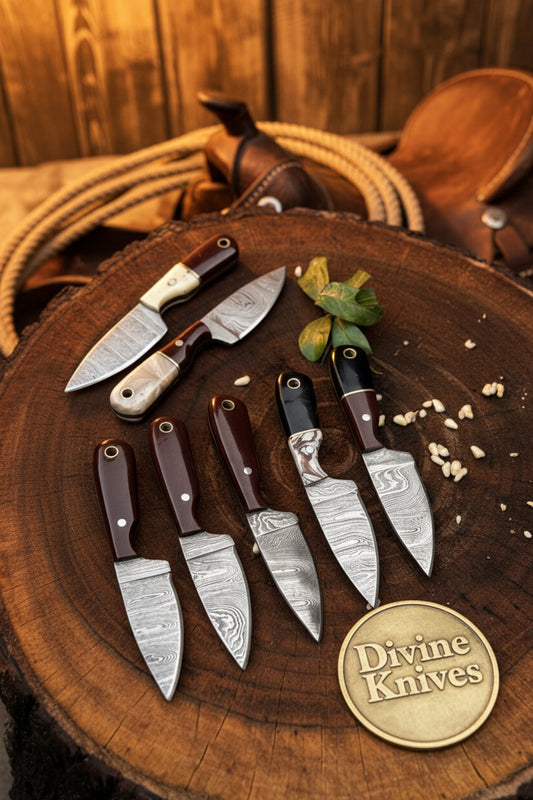
Bulk Damascus Skinner Knife Collection – 10 Assorted Handles
Regular price $349.00 USDRegular price -
Handmade Rosewood Handle Damascus Chef Knife Set – 3 Pieces
Regular price $289.00 USDRegular price -
Pinecone Drop Point Skinning Knife with Resin Handle
Regular price $189.00 USDRegular price -
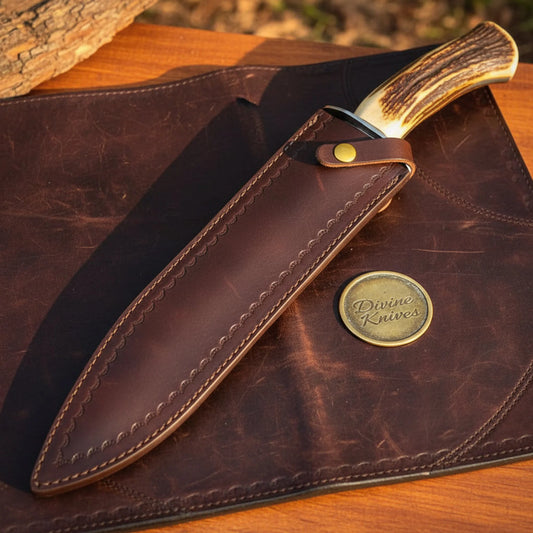
Stag Horn High Polish Clip Point Bowie Knife with Natural Stag Handle
Regular price $1,890.00 USDRegular price -
Classic Randall-Style Camp Knife with Stacked Leather Sheath
Regular price $199.00 USDRegular price -
D2 Steel Sub-Hilt Fighter Knife with Balanced Blade
Regular price $160.00 USDRegular price -
Damascus Drop Point Bushcraft Skinner with Versatile Blade
Regular price $150.00 USDRegular price -
Green Micarta Handle Bowie Knife with Grooved Spine Blade and Two Tone Leather Sheath
Regular price $189.00 USDRegular price -
Brass Bolster Twin Knife Set with Black Horn Handles and Shared Red Leather Sheath
Regular price $322.00 USDRegular price -
Bone Handle Hunting Knife Set with Two Hand Forged Blades and Shared Leather Roll
Regular price $176.00 USDRegular price -
White Bone Handle Hunting Knife with Brass Bolster and Hand Forged Drop Point Blade
Regular price $212.00 USDRegular price -
Staghorn Damascus Upswept Bushcraft Knife with Curved Blade
Regular price $169.00 USDRegular price -
Eagle Head Gut Hook Knife with Cast Brass Pommel and Natural Stag Antler Handle
Regular price $211.00 USDRegular price -
Contoured Bone Handle Skinner with Polished Steel Bolster and Forged Drop Point Blade
Regular price $188.00 USDRegular price -
Camel Bone Harpoon Damascus Skinner Set with Matched Pair
Regular price $200.00 USDRegular price -
Buffalo Horn Drop Point Damascus Skinner Set with Silver Bolsters
Regular price $190.00 USDRegular price -
Damascus Finger-Groove Camel Bone Hunter with Ergonomic Grip
Regular price $160.00 USDRegular price












What Is a Hunting Knife?
A hunting knife is a purpose-built cutting tool designed specifically for the tasks a hunter performs in the field gutting, skinning, caping, boning, and general camp work. Unlike a kitchen knife built for a cutting board, or a tactical knife built for combat, a hunting knife is engineered around the anatomy of game animals and the physical realities of wilderness use.
The key distinction between a hunting knife and a general-purpose blade is specialisation. When you field dress a deer, the wrong blade geometry can puncture the stomach and contaminate the meat. This is why hunting knives exist in distinct types. Each blade shape, each steel choice, each handle design solves a specific problem that hunters face.
Our collection covers nine specialist hunting knife types, each built for a defined purpose. This guide will walk you through every one of them.
Skinning Knife
The skinning knife is a hunter's most trusted tool for hide removal, featuring a curved, upswept belly designed for long, smooth draw cuts through tough skin. Its broad lower arc lets you pull the blade cleanly through hide without constantly adjusting your wrist angle. The low, controlled tip minimizes the risk of puncturing the meat beneath, keeping your harvest clean and intact. Purpose-built for deer, elk, bear, and boar, it turns an exhausting chore into a controlled, efficient process.
Gut Hook Knife
The gut hook is a specialized tool designed to eliminate the greatest risk in field dressing accidental puncture of the stomach, bladder, or intestines. Rather than a conventional cutting edge, it features a sharpened notch on the spine that unzips the abdominal hide from the inside out, with no sharp point ever directed toward the organs beneath. You simply insert it into a small starter incision and draw it steadily upward, letting the hook do the work cleanly and safely. Once a hunter makes the switch, the precision and confidence it provides make returning to a standard blade almost unthinkable.
Clip Point Hunting Knife
The clip point is the definitive all-around hunting knife, instantly recognizable by its concave spine that sweeps down to a fine, precise tip. That distinctive shape delivers the best of both worlds — a controlled piercing point for detail work and a full, capable belly for long slicing cuts. It transitions effortlessly from field dressing to camp tasks, making it the most adaptable blade a hunter can carry. If you could own only one hunting knife, the clip point would be the most logical and well-rounded choice you could make.
Field Dressing Knife
The field dressing knife takes over where the gut hook leaves off, handling everything from organ removal to cavity cleaning in one capable blade. Its longer, narrower profile and semi-flexible spine let it navigate precisely around bones and organs without tearing the surrounding meat. Built for medium to large game like deer, elk, moose, and hog, it carries a hunter through the entire dressing process with control and efficiency.
Caping Knife
The caping knife is built for the most delicate work in trophy preparation skinning the head, face, and neck cleanly around the eyes, ears, lips, and antler bases. Its small, slim, acutely pointed blade reaches tight anatomical spaces where a standard knife would tear or slip.
Boning Knife
Once the animal is field-dressed and back at camp or home, the work of separating meat from bone begins. The boning knife has a long, narrow, semi-flexible blade that follows the contours of bones and joints, making clean cuts of meat with minimal waste. A stiff boning knife handles larger bones; a flexible one is ideal for delicate work around ribs and spine. Butchering separating meat cleanly from bone during processing.
Bird & Trout Knife
Not all hunting involves large game. The upland bird hunter, the waterfowler, and the fly fisherman have entirely different needs compact size, light weight, and a blade suited to small anatomy. The Bird & Trout Knife answers all three. Its short, slim blade handles cleaning birds, gutting trout, and the detailed knife work that small game demands. Primary use is cleaning and preparing birds, small game, and fish.
Stag Handle Hunting Knife
The stag handle hunting knife is as much a statement of hunting heritage as it is a working tool. The handle is crafted from natural stag antler no two handles are identical giving each knife a character that synthetic materials simply cannot replicate. The natural texture of antler provides an instinctive, secure grip even in wet or bloody conditions. Paired with a classic blade profile, it is the knife of tradition.
Damascus Hunting Knife
Damascus steel is produced by forge-welding multiple layers of different steel alloys together, then folding and working the billet until the number of layers is in the dozens or hundreds. The result is a blade with a flowing, organic pattern unique to every knife and a steel composition that combines the best properties of its component alloys. Modern Damascus hunting knives offer outstanding edge retention, genuine visual beauty, and the weight of centuries of blade-making tradition.
How to Choose the Right Hunting Knife
With nine distinct blade types available, choosing the right hunting knife comes down to five key decisions. Work through each one and the right blade or combination of blades becomes clear.
Match Your Knife to Your Task
The most important decision comes before steel type or price blade shape must match the task. A gut hook excels at field dressing, a skinning knife owns hide removal, and a caping knife handles trophy prep. Many experienced hunters carry a two-knife system: a gut hook or field dressing knife for primary work, paired with a skinning or caping knife for finishing.
Blade Steel: High-carbon steel takes the sharpest edge and resharpens quickly but requires drying and oiling after use. Stainless steel resists rust with minimal maintenance ideal for wet climates and long field days. Damascus combines both, delivering excellent edge retention, toughness, and unmatched visual character.
Handle Materials: Stag antler is the traditional choice naturally non-slip, unique in every piece, and built to age beautifully. Hardwoods like walnut and rosewood offer warmth and classic grip that improves with years of use. Micarta and G10 are virtually indestructible synthetics for pure performance, while rubber and Kraton deliver maximum grip security in cold, wet, and bloody conditions.
Hunting Knife Knowledge
The Anatomy of a Hunting Knife
Spine: The unsharpened top edge. A thicker spine adds strength for aggressive work and carries the gut hook on specialist blades.
Belly: The curved lower cutting edge. A deep belly is built for long draw cuts through hide; a flatter belly suits precise, controlled work.
Tip: Determines piercing capability and safety near organs. A drop point is the safest and most controlled; a clip point offers a finer, more capable piercing tip.
Ricasso: The unsharpened flat section ahead of the guard, allowing a forefinger choke-up for extra precision during detailed cuts.
Tang: The steel extension running into the handle. Full tang is the strongest and most reliable choice for heavy field use.
Guard and Bolster: The crosspiece between blade and handle that prevents the hand from sliding forward during heavy cuts essential on field dressing knives where real force is applied.
Hunting Knife Safety in the Field
A sharp hunting knife is a safer hunting knife. That statement surprises many people, but it is true: a dull blade requires excessive force to cut, and excessive force means loss of control. The knife that slips and causes injury is almost always a blade that was not sharp enough for the task being asked of it.
Why Choose Our Hunting Knives
Every knife in our range is selected and built against a single standard: it must perform its intended task better than a general-purpose alternative. We do not offer knives that look impressive and perform generically. We offer specialist blades, each optimised for a defined purpose, built from appropriate steel, with handle choices that match the demands of real hunting conditions.
Our range spans natural heritage materials stag antler, Damascus pattern steel and modern high-performance construction. Fixed blades built for field stress. Compact designs built for lightweight carry. Blades for the hunter who hunts everything, and blades for the hunter who hunts one thing exceptionally well.
The right hunting knife makes every task in the field faster, cleaner, and safer. It is the tool you reach for first and rely on completely. Choose the blade that matches your hunt.
