Divine Knives
Damascus Hammered Nakiri Cleaver with Dimpled Finish
Damascus Hammered Nakiri Cleaver with Dimpled Finish
Couldn't load pickup availability
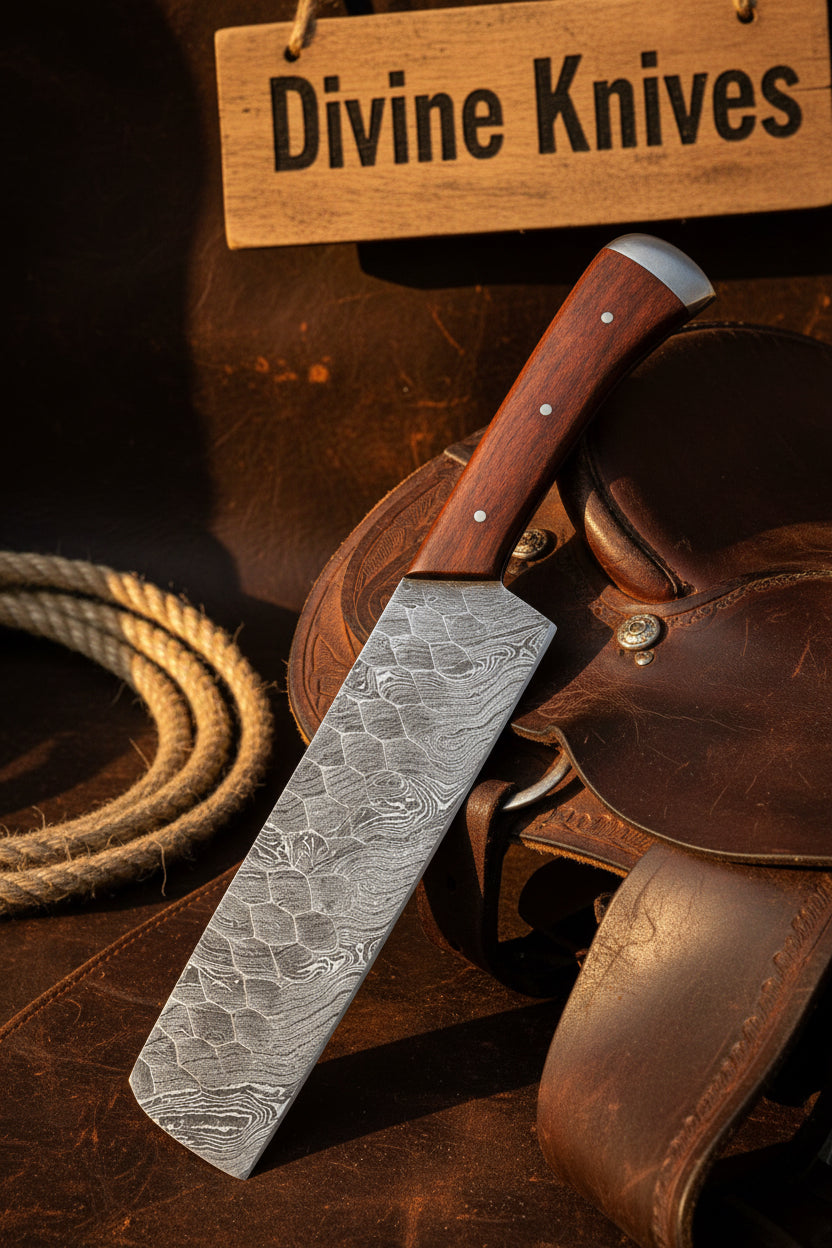
The Damascus hammered Nakiri cleaver wears a dimpled hammer finish across its face. Those small hollows break the seal between blade and food. Under the hammering, wood-grain Damascus layers run the length of the steel. An acid etch pulls the light and dark bands apart.
The blade stands tall and rectangular with a straight cutting edge. That straight edge meets the board along its full length. A squared tip keeps the profile clean and purposeful. The height gives room to scoop chopped vegetables off the board.
The handle turns to warm reddish-brown hardwood with a gentle curve. Two pale pins secure the scales along the handle. A light cap finishes the butt end. Divine Knives forges each blade and shapes each handle by hand. Small variations in the wood grain are normal.
Damascus Nakiri cleaver at Divine Knives with a dimpled hammer finish, rosewood-toned handle, and pale butt cap.
The History Behind This Damascus hammered Nakiri cleaver.
Nakiri knives grew in Japanese home kitchens as dedicated vegetable blades. The straight edge suited push cutting rather than the rocking motion of Western knives. Hammered finishes came later, added by smiths to keep slices from clinging. Damascus forging reaches back centuries, prized for strength and grain. Divine Knives builds this piece by hand in that tradition.
Hammered Nakiri Knife Performance
The straight edge lands flat on the board through the whole cut. This suits clean push cuts through onions, carrots, and greens. The hammer dimples help slices fall away instead of sticking. Hand wash and dry the blade right after use. Damascus can spot if left wet, so a light oil coat helps.
Damascus Vegetable Cleaver Construction
The hardwood scales sit tight against the tang on both sides. Pale pins run through the handle for a firm, lasting hold. The butt cap finishes the handle and adds a touch of balance. No front bolster sits between the handle and the blade. Dry storage keeps the wood stable through kitchen humidity.
Best Used For
This Handcrafted Kitchen Cleaver suits daily vegetable prep, batch cooking, and gifting to a home cook. Its height makes quick work of a full board of produce. The Damascus face also makes it a striking piece on a magnetic rack. Order the Damascus hammered Nakiri cleaver today. The hammered face paired with a rosewood-toned handle is unique here.
Every knife ships with secure, tracked shipping and careful packaging. Divine Knives keeps stock limited on this design. Each blade takes real time to forge, hammer, and etch. Cooks wanting a handmade vegetable blade often pick this over factory options. The hammer work and grain give it genuine character.
Specifications Table
|
Overall Length |
12 in |
|
Blade Length |
7 in |
|
Blade Height |
2.5 in |
|
Blade Material |
Damascus steel |
|
Blade Pattern |
Wood-grain Damascus with hammered texture |
|
Blade Finish |
Satin acid-etched, dimpled hammer finish |
|
Handle Length |
5 in |
|
Handle Material |
Reddish brown hardwood |
|
Bolster |
None at front; pale cap at butt end |
|
Pin Detail |
Two pale pins through the scales |
|
Storage |
not included |
|
Type |
Nakiri vegetable cleaver |
FAQ’s
Is this knife made in Japan?
No. This is a Japanese-style nakiri. Divine Knives makes it by hand, not in Japan.
Is the blade real Damascus steel?
Yes. The blade is forged from layered Damascus steel with a wood-grain pattern.
What are the dimples on the blade for?
That hammered finish helps food release from the blade instead of sticking to it.
How is this different from the Damascus Oyster Shucking Set?
That listing is a four-piece set of short pointed blades. This is a single tall vegetable cleaver.
Can this knife go in the dishwasher?
No. Hand wash and dry it right away to protect the steel and wood.