Divine Knives
Damascus Wharncliffe Skinner Knife with Mosaic Handle
Damascus Wharncliffe Skinner Knife with Mosaic Handle
Couldn't load pickup availability
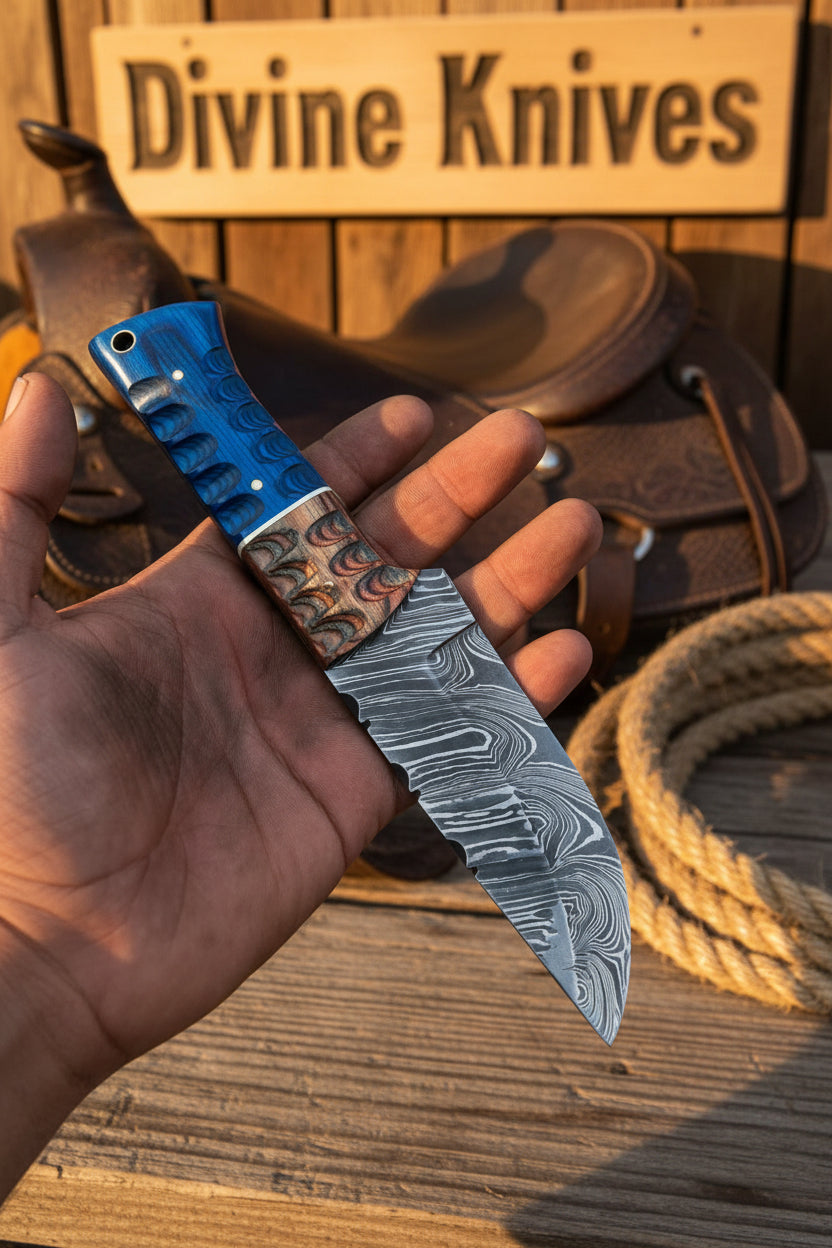
The Damascus Wharncliffe Skinner Knife brings a straight edge to serious field work. Many skinning knives rely on a curved belly for every cut. This blade takes a different path with a flatter, straighter edge. The wharncliffe shape gives precise control during detail work on hide. Careful hunters often prefer this edge style for fine, controlled cuts.
Damascus steel forms the core of this blade. Layers of steel get folded and forged into one piece. The result is a flowing wood grain pattern that never repeats twice. Each blade carries its own natural marking from the forge.
The handle opens with blue scales, then shifts into a swirled mosaic section. This layered look sets the handle apart from a single flat color. Hunters who want visual interest along with a solid grip like this build. A lanyard hole at the base adds a spot for a wrist cord.
Wharncliffe Skinner Knife at Divine Knives with a straight wharncliffe edge and a blue-to-mosaic handle transition.
The History Behind This Damascus Skinning Knife
Skinning knives trace back to hunters who needed one blade for hide work. Damascus forging dates back many centuries to smiths layering steel for strength. Wharncliffe blades grew popular for their precise, controlled cutting style. Divine Knives continues this tradition with every forged skinner blade made today.
Damascus Wharncliffe Skinner Knife Performance
The Damascus Wharncliffe Skinner Knife holds a sharp edge through repeated field use. Damascus steel resists chipping better than many single alloy blades. The straight wharncliffe edge gives fine control during detail cuts. This shape works well for careful hide and skin work. Wipe the blade dry after each use and apply a light coat of oil. This keeps the pattern sharp and the edge free of rust. A quick wipe after each outing keeps the whole blade looking its best.
Specifications
- Blade Material: Damascus steel
- Blade Pattern: Wood-grain (random swirl) Damascus pattern
- Blade Finish: High polish finish
- Handle Material: Blue scales transitioning to a mosaic-patterned section
- Bolster: Mosaic section forms the transition
- Pin Detail: Visible pins on the blue scales
- Type: Fixed blade Damascus Wharncliffe skinning knife
Fixed Blade Field Knife Construction
This fixed blade field knife uses blue scales joined to a mosaic patterned section. The mosaic transition adds texture without changing the overall grip shape. Pins secure the blue scales firmly along the upper handle. This build stays stable through repeated twisting and pulling during fieldwork. Wipe the handle clean with a soft cloth after each use. This keeps the colors and pattern looking sharp for years. Store the knife somewhere dry between uses in the field.
Best Used For
This handcrafted game processing knife suits deer season, hide work, and detail field tasks. Collectors also value the mosaic handle transition paired with a Damascus blade. It makes a strong gift for any hunter who wants precise cutting control. Order the Damascus Wharncliffe Skinner Knife today. Each blade is individually forged, so the pattern on yours will never match another.
FAQ’s
What makes a wharncliffe blade different from a curved skinner blade?
A wharncliffe blade uses a straighter edge for more controlled, precise cuts.
Is the Damascus Wharncliffe Skinner Knife made from real Damascus steel?
Yes. The blade is forged from folded Damascus steel with a natural wood grain pattern.
What handle material does this skinner use?
The handle uses blue scales that shift into a swirled mosaic section.
How do I care for a Damascus skinning knife?
Wipe the blade dry after use and apply a light coat of oil regularly.
What makes this different from the Azure Twin-Hole Damascus Hunter?
This skinner has no finger holes and uses a straight wharncliffe edge instead.