Divine Knives
Rasp Ring Drover Skinner Knife with Bone Handle
Rasp Ring Drover Skinner Knife with Bone Handle
Couldn't load pickup availability
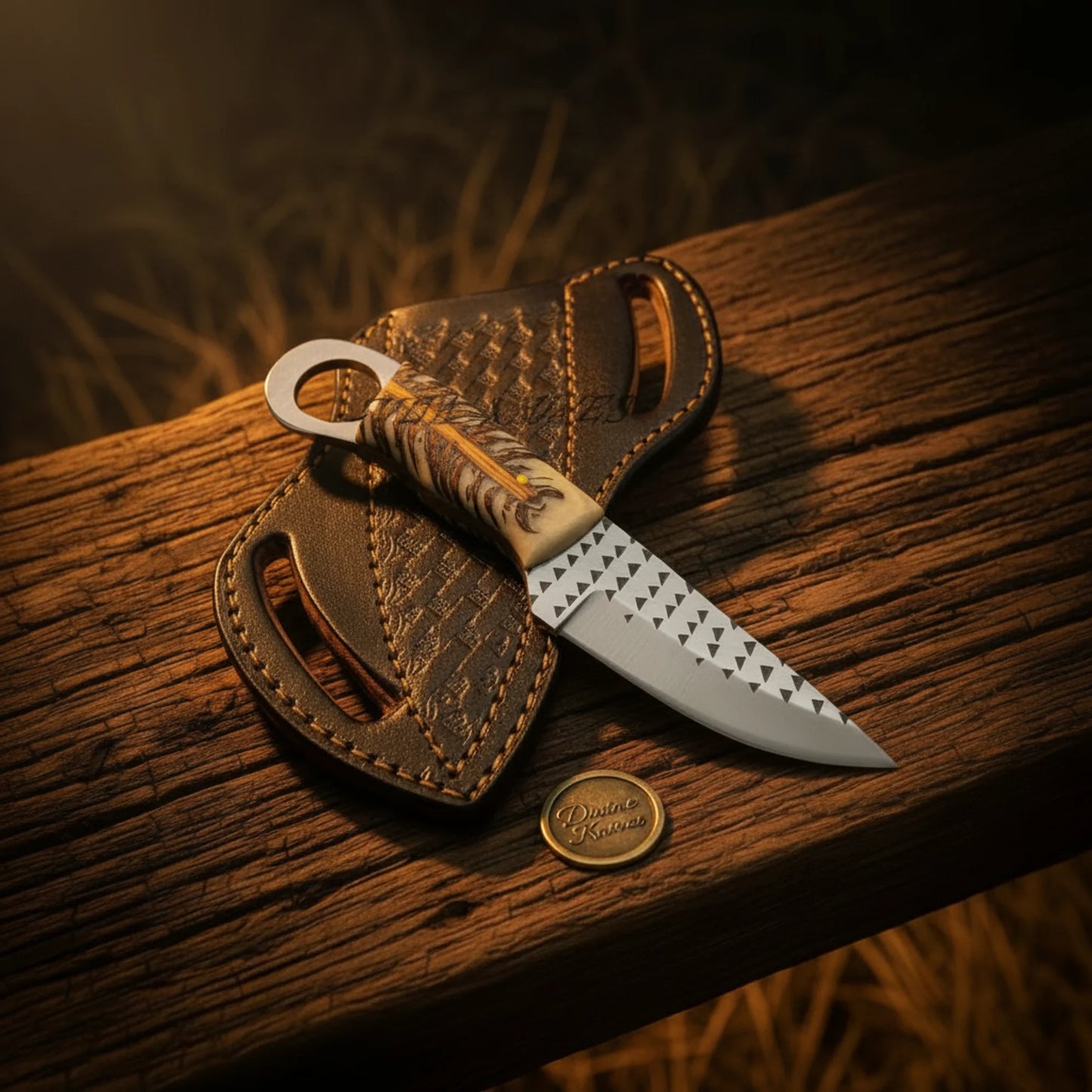
Rasp Ring Drover Skinner Knife carries a working history built for the field. Ranch hands needed a blade that moved fast and stayed controlled. The curved skinner edge opens a hide in fewer strokes. That upswept belly follows an animal's natural lines with ease.
Most skinners stop at a plain handle. This one adds a forged steel finger ring instead. The ring locks your grip in place during long sessions. Hand fatigue sets in later, and control stays sharp longer. Bone scales finish the handle with real texture. That grip holds steady even when hands turn cold or wet.
Divine Knives builds every piece in small batches. No two bone handles share the same grain or patina. Your knife will never match another off a shelf. Once this batch sells out, that exact grain pattern will not be available again.
Rasp Ring Skinner Knife at Divine Knives. It pairs a forged rasp steel blade with an integrated bone ring handle.
The History Behind This Rasp Ring Drover Skinner Knife
Skinner blades trace back to frontier trappers. They needed one tool for hide work and camp chores. Rasp and file steel became popular with early knife makers. The tooth pattern proved the metal had already hardened through years of use. Bone handles carry an even older trapper lineage tied to the land itself. Divine Knives keeps that same rugged spirit alive today.
Rasp Steel Skinner Knife Performance
The rasp steel blade holds a working edge through repeated field use. It resists chipping under normal cutting pressure. Its curved profile clears hide and tissue in smooth passes. Short choppy cuts are not needed here. The forged ring guard keeps the blade locked at the right angle. That control holds steady even during wet or greasy work. A light oil coat after each use protects the edge from surface rust. Wipe the blade dry before storing it in the sheath.
Specifications
Handmade Skinner Knife Construction
The bone handle scales sit directly against the full tang. This gives the knife a solid, one-piece feel. Natural color variation runs through every scale. Grain and tone shift slightly from knife to knife. The forged steel ring extends straight from the tang. It is not a separate welded piece. This keeps the whole handle structurally sound. Bone also resists moisture better than many wood handles over time. The tooled leather sheath adds another layer of everyday protection.
Best Used For
This knife suits hunters who field dress game often. Collectors drawn to rasp steel and bone construction will also value it. Its compact size and tooled sheath make a strong gifting choice too. Order the Rasp Ring Drover Skinner Knife today. Each bone handle is individually forged, so your piece stays one of a kind.
FAQ’s
What is a Rasp Ring Drover Skinner Knife used for?
It handles skinning, field dressing, and everyday outdoor cutting tasks.
Is the blade made from Damascus steel?
No, the blade uses forged rasp steel instead of Damascus.
How is this different from a Damascus skinner knife?
Rasp steel keeps a raw file texture near the edge. Damascus shows a layered pattern across the whole blade instead.
Does the finger ring make the knife harder to use?
No, the ring improves grip control and reduces hand fatigue.
What handle material does this skinner knife use?
Natural bone, with grain and color that vary by piece.