Divine Knives
Rasp Steel Bone Bull Cutter with File Texture and Ring Handle
Rasp Steel Bone Bull Cutter with File Texture and Ring Handle
Couldn't load pickup availability
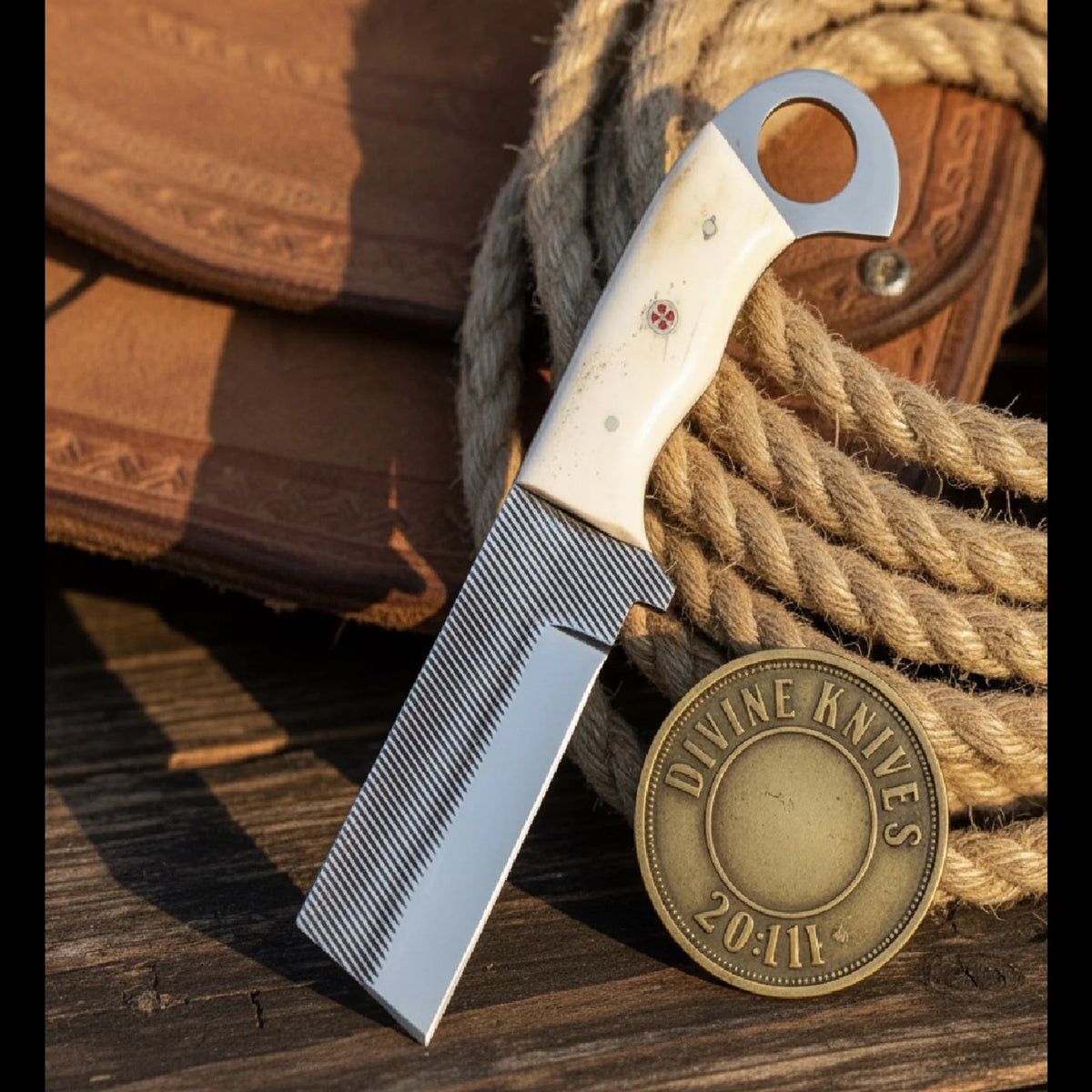
The Rasp Steel Bone Bull Cutter starts as a farrier's working tool. File teeth still mark the surface where the rasp once shaped hooves. That texture stays visible rather than being ground away completely. Reclaimed steel like this carries a history no fresh bar stock has.
A bone handle closes out the build in a pale cream tone. A round loop opens near the top of the grip. A finger through it adds a second point of control. One copper-toned pin locks the bone against the tang.
Rasp steel runs harder than most reclaimed stock once it's heat-treated right. The teeth pattern breaks up light differently than a smooth grind. A small dark spacer marks the seam between bone and blade. Divine Knives selects and reworks each rasp individually.
Rasp steel bull cutter at Divine Knives with visible file tooth texture, a bone loop handle, and reclaimed farrier steel.
The History Behind This Rasp Steel Bone Bull Cutter
Farriers wore rasps down through years of shaping hooves at the forge. Knifemakers began reworking spent rasps rather than sending them to scrap. The leftover teeth became a signature rather than a flaw to hide. Bone handles paired naturally with reclaimed steel long before synthetic scales existed. Divine Knives continues that reclaiming tradition in this build.
Why Choose Rasp Steel Knife
Old rasp stock holds an edge well once properly hardened. The loop steadies grip through fast, repeated cutting motions. Visible teeth marks do not affect the ground cutting edge. Wipe grime from the bone after use and let it dry naturally. A light oil film on the steel guards against surface rust.
Bone Handle Work Knife Construction
The tang seats into the bone with the pin locking it tight. The loop is shaped from the same reclaimed bar as the blade. File teeth remain along sections the grinder did not touch. Bone tone and grain differ from piece to piece since each is natural. Keep the knife dry between uses to protect the bone for as long as possible.
Best Use:
This knife suits ranch work, farm tasks, and fans of reclaimed steel builds. The loop adds real control during quick, repeated cuts. Its history as working tool steel gives it a story most blades lack. Order the Rasp steel Bone Bull Cutter today. Genuine rasp texture on a bone loop handle appears nowhere else here.
Divine Knives sources rasps individually rather than in bulk lots. Grind pattern and remaining tooth coverage vary rasp to rasp. Confirm current photos closely, since reclaimed stock never repeats exactly. Small builds like this ship padded and tracked. Check the loop and pin seat as soon as it arrives.
Specifications
- Overall Length: 8 in
- Blade Length: 4 in
- Blade Material: Reclaimed rasp/file steel
- Blade Pattern: Genuine file tooth texture
- Blade Finish: Raw/semi-ground, teeth partially retained
- Blade Shape: Bull cutter family styling; tip partially obscured in photo
- Handle Material: Natural bone, cream tone
- Loop: Integrated finger loop cut into the handle
- Pin Detail: One copper-toned pin
- Spacer: Small dark spacer at handle-to-blade transition
- Tang: Seated into bone handle.
- Type: Reclaimed rasp steel bull cutter
FAQ’s
What is rasp steel?
Steel from a farrier's file, reworked into a blade with tooth texture kept visible.
How is this different from the Antler Loop Bull Cutter?
That knife uses an antler tip handle with a Damascus blade. This one uses bone with reclaimed rasp steel.
How is this different from the Red and Blue Scalloped Bull Cutters?
Those use dyed synthetic handles with Damascus blades. This one uses natural bone with rasp steel.
Is the handle real bone?
Yes. It is natural bone, not synthetic or dyed material.
Does the leftover texture affect the cutting edge?
No. The ground edge cuts clean. Texture remains only where the grinder did not need to pass.