Divine Knives
Rasptooth Bullcutter Knife with Hardwood Handle
Rasptooth Bullcutter Knife with Hardwood Handle
Couldn't load pickup availability
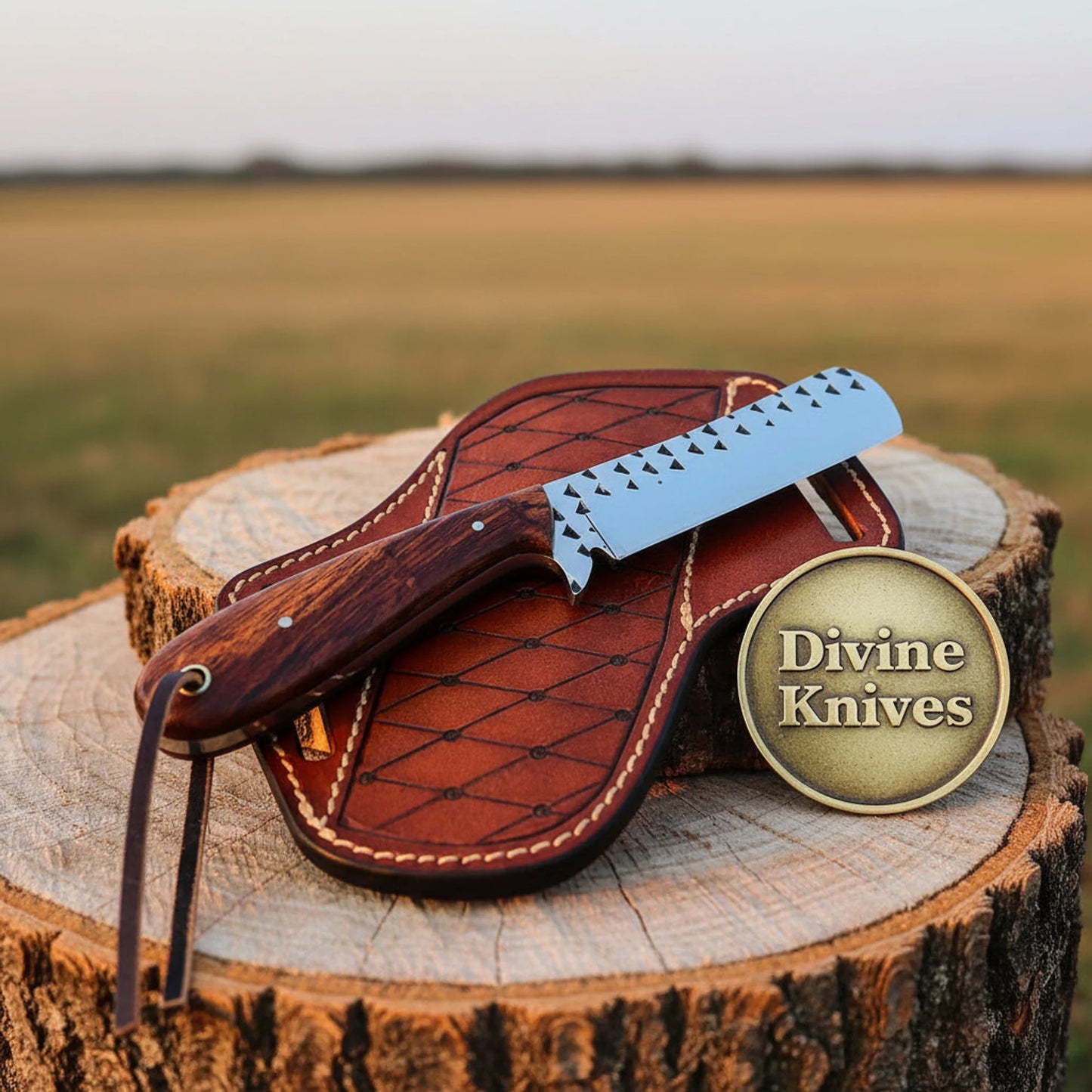
The Rasptooth Bullcutter knife starts as a genuine farrier's rasp. Smiths once shaped horse hooves with this exact tool. Today it cuts a second path as a working blade. The original rasp teeth still march across the spine. They prove this steel lived a hard life before the forge.
Rasp files are made from tough high-carbon steel. That steel hardens deeply and takes a keen working edge. Our smiths grind the lower blade face to a bright polish. Raw teeth above and mirror steel below create bold contrast. Every rasp wears differently, so no two blades ever match.
A tooled leather sheath ships with each knife. Its diamond pattern and cream stitching match classic ranch gear. Checkout is secure, and every order ships with tracking. Stock stays limited because each piece is individually handmade.
Rasptooth Bullcutter at Divine Knives. No other piece pairs a raw tooth spine, hardwood scales, and a tooled sheath.
The History Behind This Rasptooth Bullcutter Knife
Bull cutter knives rode with stockmen, drovers, and ranchers across the American West. Their squared tips managed daily livestock chores without risk of accidental punctures. Farriers wore out countless high-carbon rasps before smiths gave them second lives. Divine Knives pairs that reclaimed steel with hardwood, a handle material trusted for centuries.
Bullcutter Knife Performance
High-carbon rasp steel holds a working edge through long chores. The flat grind gives the blade a strong, stable cutting face. A squared tip guards against accidental stabs during close work. The straight edge tracks true through rope, twine, and hide. Full tang construction carries cutting force straight into your grip. Wipe the blade dry after every use. A light coat of oil keeps rust away. Store it dry, and rest it outside the sheath long term.
Specifications
- Blade Material: High Carbon Farrier's Rasp Steel
- Blade Pattern: Rasp File Tooth Pattern
- Blade Finish: Hand-Ground High Polish with Raw Rasp Spine
- Handle Material: Polished Brown Hardwood Scales
- Pin Detail: Silver Steel Pins with Lanyard Tube and Leather Cord
- Tang: Full Tang
- Storage: Tooled Brown Leather Sheath with Cream Stitching
- Type: Fixed Blade Bull Cutter Knife
Handmade Bullcutter Knife Construction
Polished hardwood scales cover the full tang on both sides. The wood glows with warm brown tones and natural grain. Silver steel pins lock the scales in place for life. A lanyard tube sits at the butt with a leather cord. That cord adds grip security during wet ranch work. Dense hardwood shrugs off moisture better than soft timber. Even so, dry the handle after cleaning and skip long soaks. The tooled sheath guards the edge between jobs.
Best Used For
This blade earns its keep on ranches, farms, and campsites. It handles feed bags, baling twine, rope, and leather. Collectors prize rasp blades for their visible working history. The raw teeth also make it a striking display piece. It makes a memorable gift for ranchers and outdoorsmen alike. Order the Rasptooth Bullcutter knife today. Each rasp is unique, so no two blades are ever alike.
FAQ’s
What is a bullcutter knife used for?
Ranchers use it for livestock chores, rope, twine, and general cutting. The squared tip prevents accidental punctures during close work.
Is this knife made from a real farrier's rasp?
Yes, each blade is forged from a genuine used rasp. The original file teeth remain visible along the spine.
How does this differ from a Damascus bullcutter knife?
Damascus blades show layered patterns from folded billets. This blade shows true rasp teeth from one high-carbon file.
Do the rasp teeth affect cutting performance?
No, the teeth sit on the spine, well away from the edge. The cutting edge itself is fully ground and polished.
How should I care for high carbon steel?
Wipe the blade dry after use and oil it lightly. This simple habit keeps rust from ever taking hold.