Divine Knives
Ring Claw Damascus Karambit with Claw Blade & Integral Steel Ring
Ring Claw Damascus Karambit with Claw Blade & Integral Steel Ring
Couldn't load pickup availability
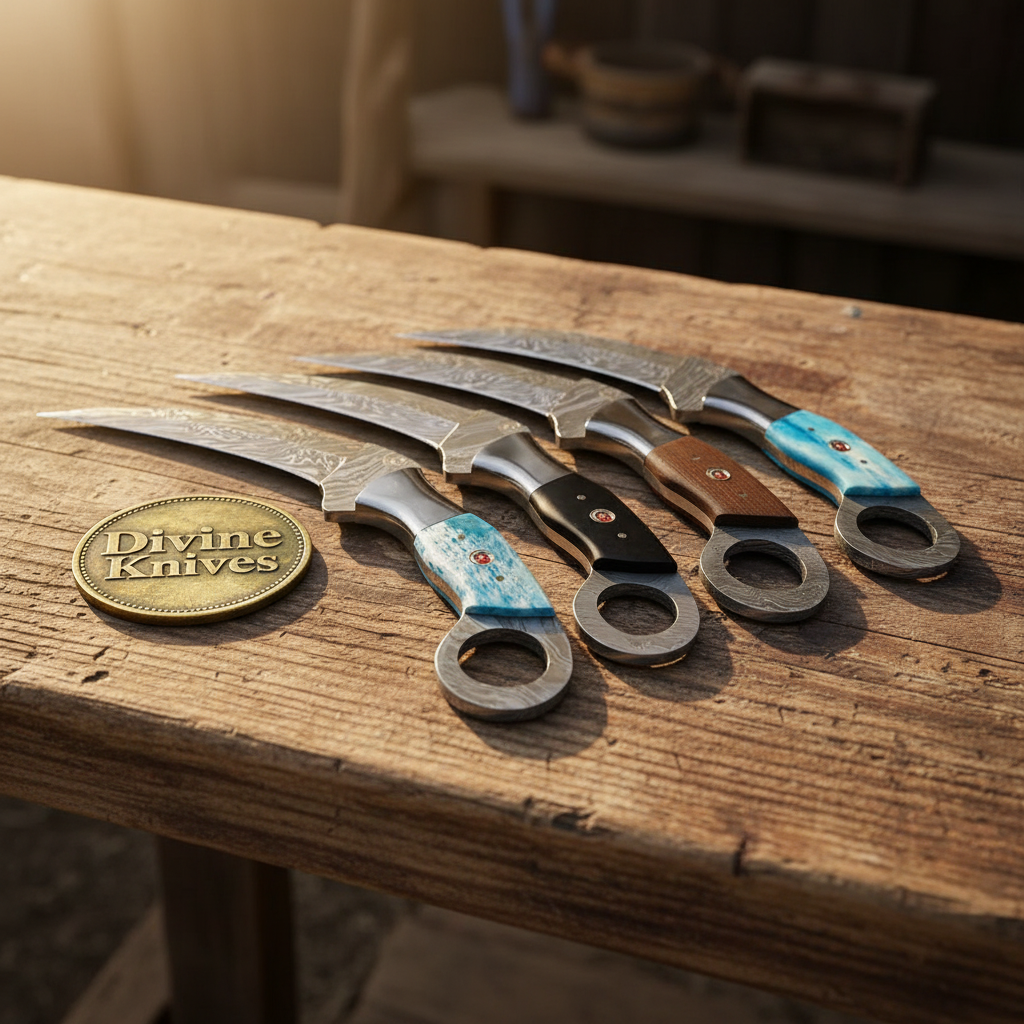
The Ring Claw Damascus Karambit follows the sweep of a tiger's claw. Feathered Damascus layers trace every inch of the curve. A polished bolster and steel ring complete the silhouette. Five handle colors let collectors claim their own look. Each one frames the same remarkable curved steel.
The karambit began life in Southeast Asian farm fields. Its hooked edge gathered stalks, cut cordage, and pruned trees. That pulling geometry still excels at rope and strap work. The retention ring keeps the grip planted through hard pulls. Modern collectors prize the shape as functional sculpture. Few blade forms photograph this dramatically.
Choose blue bone, black, maroon, brown wood, or navy scales. Every handle carries a mosaic pin at its center. Each karambit is individually forged in limited quantities. Secure checkout and tracked shipping cover your order.
Ring Claw Karambit at Divine Knives. No other piece sweeps full Damascus from tip through ring.
The History Behind This Ring Claw Damascus Karambit
Farmers across Indonesia and Malaysia shaped the first karambits. The curved blade mimicked claws for harvest and rope work. Traders later carried the design across the islands and beyond. Divine Knives honors that heritage in flowing Damascus steel.
Claw Style Karambit Performance
A curved edge concentrates force through the pull. Rope, webbing, and netting part with little effort. The hooked tip starts cuts in flat strapping cleanly. Gardeners will recognize the pruning knife logic instantly. Vines, roots, and stems yield to the hook. Damascus layers keep the recurved edge keen longer. Sharpen it with a round or tapered rod. Wipe the blade dry and oil the layers monthly. The etched pattern hides small scratches gracefully. Honest use only enriches its character.
Specifications
- Overall Length: 7.5 inches along the curve
- Blade Length: 3.5 inches (curved inside edge)
- Blade Material: Forged layered Damascus steel
- Blade Pattern: Feathered Damascus pattern
- Blade Finish: Etched pattern contrast finish
- Handle Length: 3 inches plus 1-inch retention ring
- Handle Material: Available in blue bone, black, maroon, brown wood, or navy scales
- Bolster: Polished steel
- Pin Detail: Central mosaic pin with steel pins
- Tang: Full tang, one-piece construction with integral ring
- Storage: Not included
- Type: Fixed blade karambit
Ring Handle Karambit Construction
One Damascus billet forms blade, tang, and ring together. Nothing is welded on or bolted after the fact. Strength flows unbroken from tip to ring. A polished steel bolster brightens the mid handle. Contoured scales fill the fingers ahead of the ring. A mosaic pin and steel pins lock them down. The ring anchors your smallest finger or index grip. It also hangs the knife safely on a hook. Every edge of the ring arrives smoothed and eased. Comfort was engineered in, not added later.
Best Used For
Put this claw to work on rope, twine, and strapping. It also earns a place in garden and orchard kits. Boaters value curved edges for line work too. Collectors display karambits as the boldest blade silhouette. The five colorways invite matched pairs and gifts. It suits birthdays for collectors of unusual blades. Order the Ring Claw Damascus Karambit today. Pick your color before this run closes out. Each forging run carries patterns that never return.
FAQ’s
How does this differ from the Rosewood Damascus Fillet Knife?
Both are single Damascus blades. The fillet knife runs long and straight, while this claw curves for pull cuts.
What was the karambit originally used for?
It began as a Southeast Asian farming tool. Farmers used it for harvesting, rope, and pruning.
What is the ring for?
The ring secures your finger for a locked grip. It also allows safe hanging storage.
Which handle colors are available?
Five options are shown: blue bone, black, maroon, brown wood, and navy. Each carries a mosaic pin.
How do I sharpen a curved karambit edge?
Use a round or tapered sharpening rod. Follow the inside curve with light, even strokes.
Is the ring part of the blade steel?
Yes, blade, tang, and ring form one Damascus piece. That single billet build maximizes strength.